Longing for Father // DOR de tata (RO)
2025
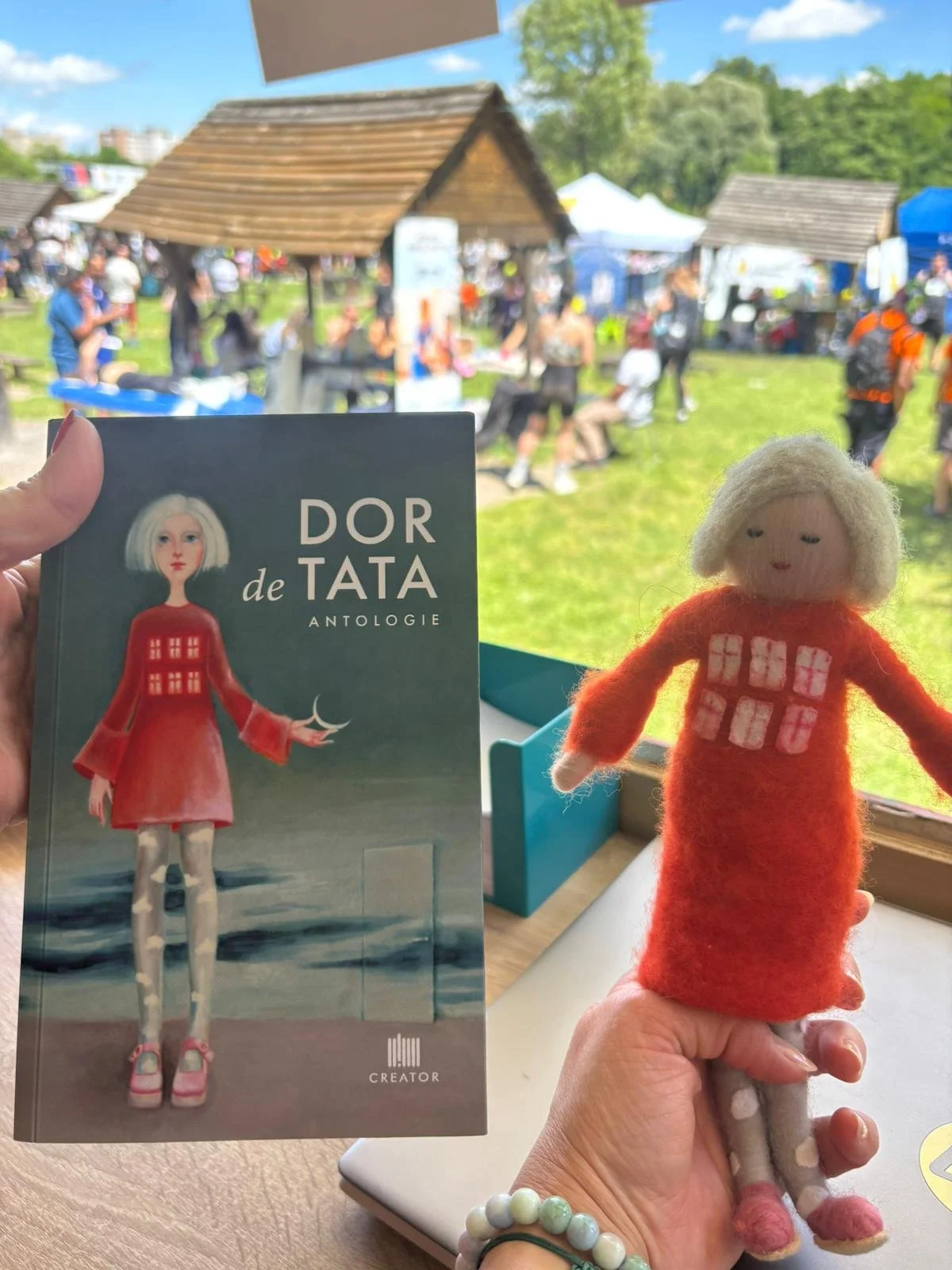
Longing for Father is a moving anthology comprising the personal stories of 15 women who lost their fathers. The book brings together sincere and courageous testimonies from well-known voices in the online and literary spheres. In a way, Longing for Father was born in the aftermath of EVERY DEATH IS A GATE, a project that opened the space for intimate and sincere conversations about death and grieving.
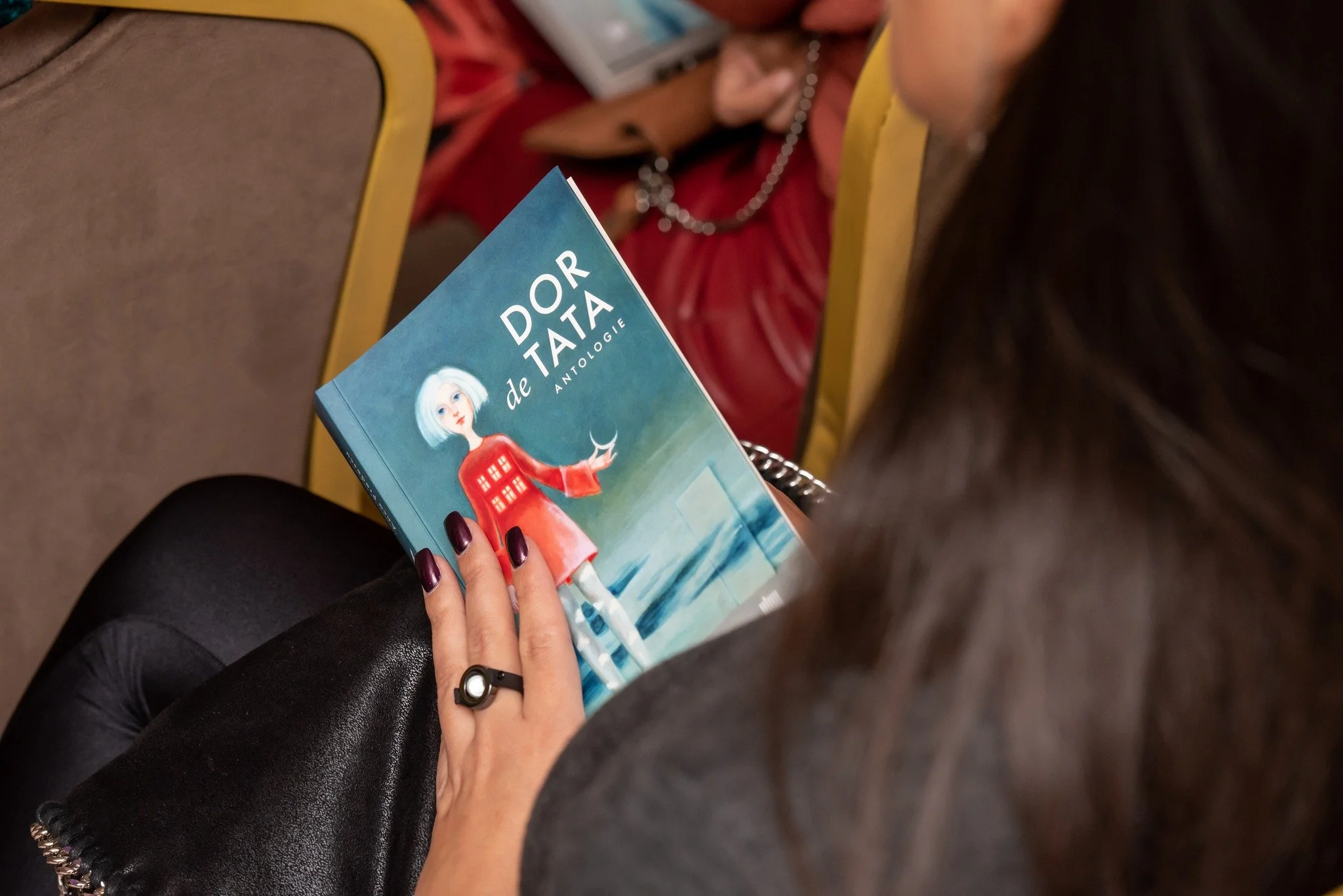
„When I read the Longing for Father manuscript, I entered into the intimacy, into the souls of these extraordinarily courageous women, who allowed me to connect with some of the deepest feelings a person can experience. Some of the authors I know personally, as close friends, while others are individuals I admire and appreciate from afar. I discovered others through this process, feeling grateful for their courage in sharing and revealing themselves to the world.
A father is unique. A father is distinct from a mother. Whether present and involved or absent, strong and protective or toxic and frightening, his role is definitive in the existential development of every woman. The father detaches the little girl from the nest her mother created, introducing her to life's social sphere. His energy and image will then be sought in every significant man until she understands him, forgives him, and ultimately makes peace with him.
We cannot avoid, save, or change the outcome. After the initial numbness passes, and awareness sets in, tears emerge to cleanse and soothe the wounds, inflicted willingly or unwillingly, throughout the living relationship. For a time, everything hurts, in a continuous present. The remaining void aches, as do all the unspoken words and all the embraces never felt. The loss of a parent through death, particularly a father, is experienced as one of the most complex psychological processes a person can undergo.
You were daddy's girl, or he abandoned you and you hated him, consumed by longing. He was great and kind, wise or naive; he was close to you and shaped you, or he was too busy providing for your needs and you wished he were more present; he inspired you or he made mistakes; you felt his love intensely or he tormented you all. However he was, he was. Now he is no more. You can only remember, and you have one privilege: to choose the good memories, after having exorcised the others as best you could”.
-Luana Schidu, the editor of the book
Most high school parties were held either at your place or at Mușatești's. Just like your parents, Conu Tudorică and Tanti Kitty were almost always happy for guests. Both houses always had an open door. The Mușatești's also had a terrace with Portuguese tiles where you all reveled, a terrace that became legendary. That's where the large tape recorder, bought by Conu Tudorică from Moscow (where he had been invited to stage Titanic Vals), was set up. It was a Yauza 5, with a sheet metal casing. You got the music from different sources. Dinu Suciu recalls that sometimes you'd spend evenings recording music from Radio Belgrade onto tape reels obtained through connections from our local radio station, which was a stone's throw from the Mușatești home. The radio tapes were very large, and you had to cut them to fit on a normal tape recorder reel. You listened to jazz and rock, and the trend was to do hula hoop with hoops. Real competitions took place between the girls and boys who managed to move the gymnastics hoops to the rhythm of the music, from their ankles all the way up to their chests. If you showed up at a party wearing a pair of jeans or foreign sneakers, you were the coolest. The gatherings usually ended around 10-11 PM.
Dinu recalls that, despite these being rather modest parties, zaibăr (a strong local wine) was always served in crystal glasses. Usually, the boys brought homemade wine, and the girls brought cakes. The rest fell on the host's shoulders, who made sandwiches, typically from Parisian baguettes, which had just appeared. At Mușatești, the chances of running out of wine were slim. Conu Tudorică had a 50-liter barrel of wine installed on one of the upholstered chairs in the living room, covered by a Persian carpet. Tanti Kitty would scold him, but she also found it terribly amusing. She knew very well whom she had married and deified her husband. I imagine the house on Luigi Cazzavilan as a sort of ground zero for Bucharest's social scene of that era.
The house on Caragea Vodă street also didn't lack charm, though Fof was less permissive than Tanti Kitty. You had a tape recorder brought by your father from the Institute of Folklore and probably a record player too, because Ion remembers that you borrowed vinyls from your aunt Doda. Ion recounts that before a party, Fof gathered all you boys to instruct you. She told you that you had to invite all the girls to dance. She understood you each had your crushes, but insisted that the girls you liked should be danced with later in the evening. Fof suffered because in her youth she hadn't been invited to dance much and, being a fiery feminist, she wanted to make other girls' lives easier. Glenn Miller, Andrew Sisters, Mahalia Jackson, Nat King Cole, Ella Fitzgerald, and, of course, Louis Armstrong. Just so you know, this is roughly what I listened to the whole time I was writing this letter to you.
Authors: Anca Predescu, Ioana Chicet-Macoveiciuc, Lilia Cozari, Ioana Ifrose, Petra Vlad, Laura Driha, Laura-Maria Bercean, Maria Orban, Laura Popeea, Diana Balint, Camelia Bota Rafiroiu, Maria Mazilu, Oana Huiu, Rucsandra Pop și Claudia Maria Udrescu.